

Templates
Upload custom HTML and Liquid annotation interfaces bundled with manifest configurations, track automated validation states, and manage version lifecycles.
Overview
Templates define the annotation interface annotators see when working on a task. Templates
are a mandatory prerequisite for creating a project. They are uploaded as ZIP packages
containing HTML/Liquid annotation interface files and a manifest.json configuration. Navigate
to Templates in the left sidebar.
Guide: Uploading a Template
Step-by-Step Guide
Navigate to Templates and click Create Template
Click Templates in the sidebar, then click the blue Create Template button.
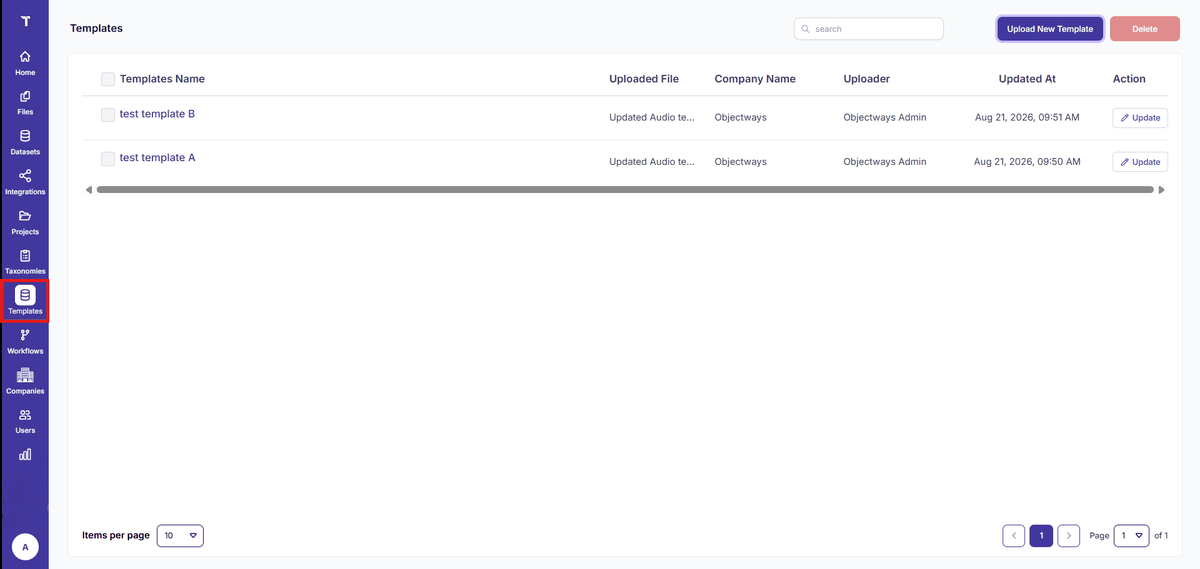
Figure 53: Create Template Page
Enter Template Name and Description
Provide a unique Template Name (e.g. Audio Transcription v1) and an
optional summary.
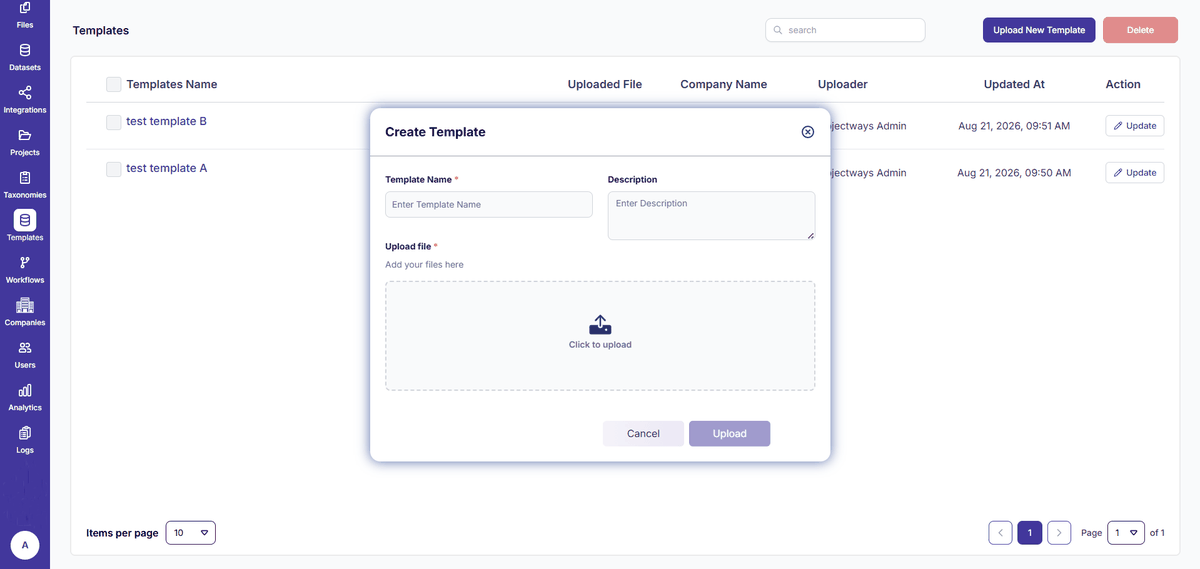
Figure 54: Template - Name and Description Form
Select or Drag-and-Drop ZIP Package
The ZIP package must include at minimum a template.html (or Liquid)
entry point and a valid manifest.json.
Click Upload
The platform automatically unpacks and validates the ZIP structure upon upload.
Template Validation States
Upon upload, the package is processed by the background validator:
- PENDING Validation is queued and actively running structural linting.
- PASSED Valid structure and manifest syntax. Ready to be linked to workflows and projects.
- FAILED
Syntax or structural errors detected (e.g. missing
manifest.json, malformed HTML). Check the error log for details.
Template Versioning
Each upload creates a new version (e.g., V.1, V.2). View all
historical versions and their validation status directly from the template details page. Active projects
continue using their locked version until manually updated.
Managing Templates
- View: Browse the directory of all templates with version counts, active projects, and validation tags.
- Update: Upload a new version of an existing template without breaking existing projects.
- Delete: You cannot delete templates that are actively used by any live project.