

File Management
The central repository for company files, local upload limits, AWS S3 direct imports, dataset assignments, and deletion rules.
Overview
The Files section serves as the central repository for all raw data files within your company. Navigate to Files in the left sidebar to inspect and organize items.
Files Dashboard
View all files uploaded across the tenant. You can search by filename, sort by upload date or size, and filter by file mime-type.
Uploading and Importing Files
Click the Upload Files button. Two options are available:
Option 1: Upload from Device
Select files from your local system. You can upload up to 50 files at a time per batch.
Option 2: Import from AWS S3
Choose a configured S3 integration (see Section 6), browse the S3 bucket, and select individual files or paste an S3 folder key path to import its contents.
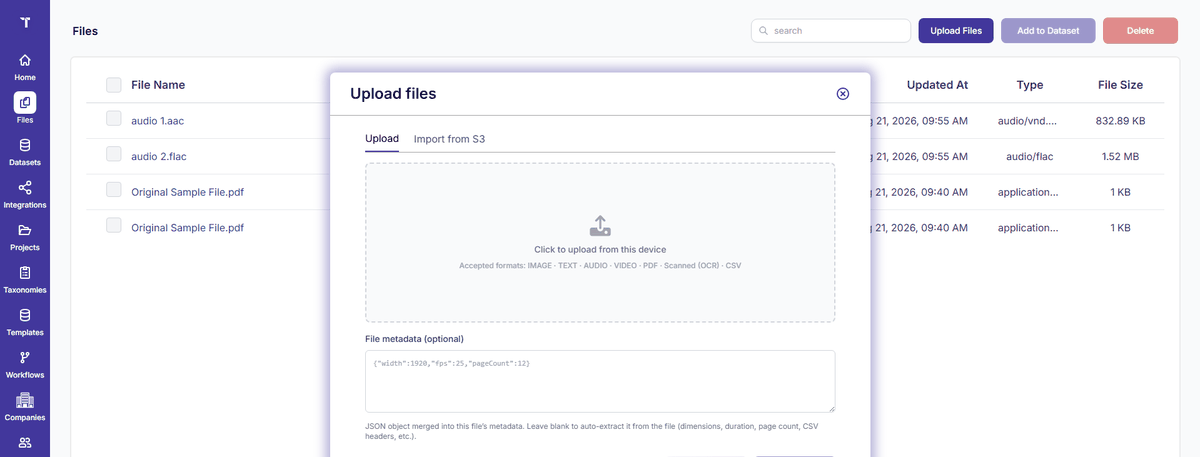
Figure 26: Files - Upload Page
Adding Files to a Dataset
- Select the files you wish to organize using table checkboxes.
- Click Add to Dataset.
- Select an existing target dataset or create a new dataset container inline.
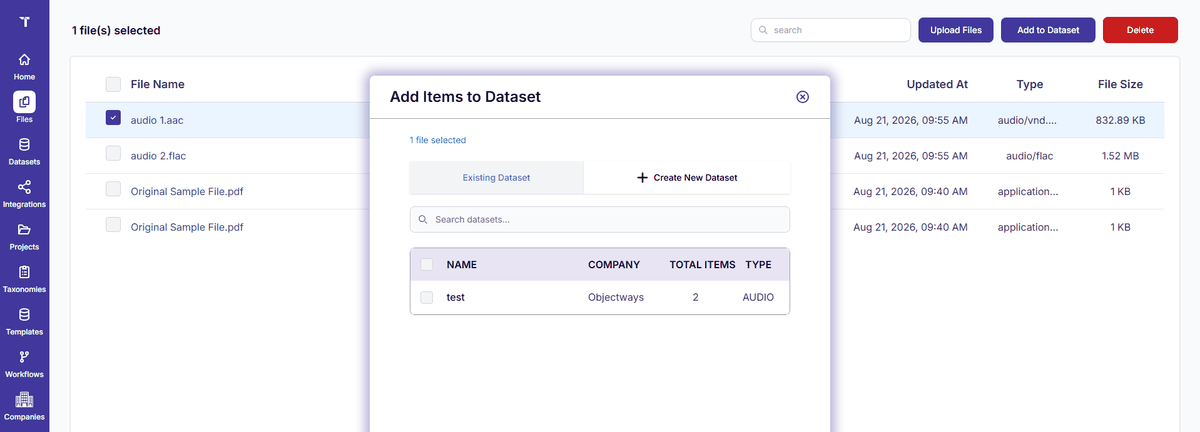
Figure 27: Files - Add to Dataset
Deleting Files
- Select the file(s) and click Delete.
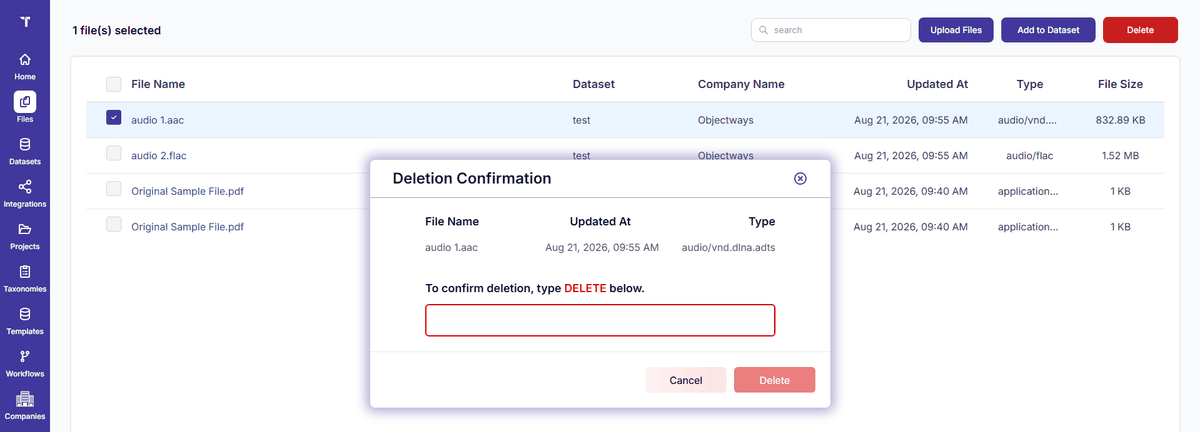
Figure 28: Files - Delete